Why So Many San Diego Contractors Are Underinsured (and How to Fix It)
July 2025



July 2025

Running a contracting business in San Diego comes with enough pressure – tight deadlines, client expectations and managing crews. But many local contractors are carrying insurance policies that leave them dangerously exposed to financial loss, legal trouble or job delays.
The worst part?
Most don’t realize it until a claim is denied or a license renewal is blocked.
From general liability gaps to misclassified workers and uncovered vehicles, we’ve seen how underinsurance shows up in real-life jobs, especially for painters, plumbers, HVAC crews, electricians and subcontractors.
A recent California Department of Insurance commercial lines guide highlights that many small-business policies including those for contractors, lack critical coverages like inland marine or proper liability limits. In our experience at H&M Insurance, more than 50% of the contractor policies we review in San Diego are missing at least one major coverage component.
In this post, we’ll break down the most common contractor insurance mistakes we see, what coverage you actually need, and how to fix gaps before they lead to serious problems.
Most contractors think “underinsured” means not having enough coverage. And yes, that’s part of it, but the bigger issue is carrying the wrong kind of coverage or skipping it entirely because of a misunderstanding.
Here’s what we see most often:
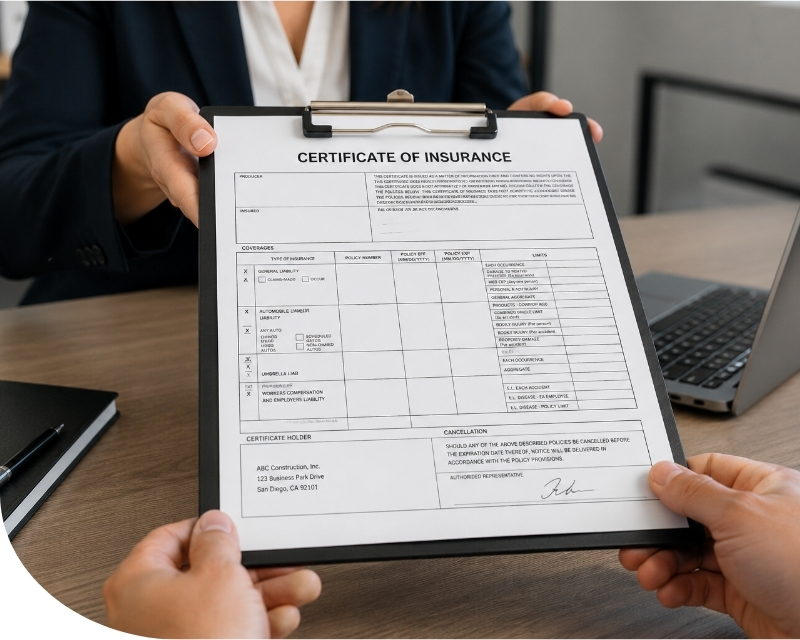
In many cases, contractors get coverage just to meet a license or bid requirement, but the actual policy doesn’t protect them when it matters. A certificate of insurance (COI) alone doesn’t mean you’re truly covered.
At H&M Insurance, we review contractor policies every week. Here are the most common gaps we uncover often with serious financial consequences if left unchecked:
| Risk Area | What’s Missing | What Can Happen |
|---|---|---|
| General Liability | Low limits, no products-completed operations | Job site injury or property damage claims may exceed your policy limits |
| Workers’ Comp | No coverage for part-time help, misclassified 1099s | Injured workers trigger audits, penalties, or lawsuits |
| Commercial Auto | Using personal trucks for work without commercial policy | Claims denied if you’re hauling tools or driving to job sites |
| Tools & Equipment | No inland marine policy | Stolen tools from job sites or trucks aren’t covered by general liability |
| Subcontractor Coverage | Not listing subs properly or missing “Additional Insured” endorsements | A subcontractor’s mistake could fall back on your policy or delay payment release |
| Certificate Assumptions | Thinking a COI = coverage | COIs show active policies, but don’t reveal exclusions or gaps |
Most of these issues come from good intentions, contractors who buy what they’re told they need, only to find out the fine print didn’t match the jobsite risk.
Take a San Diego painter we worked with recently. He had general liability to meet license requirements but skipped workers’ comp since he “only hired help on weekends.” One Saturday, a helper fell off scaffolding and fractured his wrist.
Not only did the painter have to cover emergency medical costs out of pocket, but CSLB flagged his license for noncompliance and his next job bid was rejected because his COI couldn’t be updated in time.
This kind of situation happens more than you’d think. And it’s avoidable with the right policy structure from the start.
It’s easy to assume you’re insured “well enough” especially if you have a COI in hand or your license was recently renewed. But the real question is: Are you covered for what could actually go wrong on your jobs?
Here are a few key things to check:
If you pay anyone regularly – day labor, family or part-time help, you likely need workers’ comp. Misclassifying workers as 1099s won’t protect you in an injury claim.
Personal auto policies usually exclude business use. If you’re hauling tools or meeting clients, you may need a commercial auto policy, even if you’re a sole proprietor.
General liability won’t cover stolen gear from a site or truck. A tools and equipment (inland marine) policy can cover thousands in losses.
You may need to list them as Additional Insureds on your liability policy. If you don’t, they might withhold payment or shift liability onto you after a claim.
If you’ve added vehicles, hired anyone new or taken on bigger jobs, it’s time to check whether your coverage still fits.
A strong insurance plan is about choosing the right types based on your actual work, your crew and your contracts. Here’s what that often includes for San Diego contractors:
This is your baseline coverage. It protects against claims related to property damage or bodily injury you may cause on the job. Most licensed trades in California are expected to carry it and many contracts require specific endorsements for subcontractors or completed operations.
We explain this in more detail on our contractor insurance in San Diego page, including how to structure coverage when you subcontract part of the work.
If you have even one employee, whether full-time, part-time, or a long-term “helper” – California law requires you to carry workers’ comp. Many contractors are caught off guard when audits reveal misclassified labor or cash payments.
Visit our workers compensation page to learn how this coverage works and how it’s calculated based on payroll.
This coverage protects portable tools and machinery that travel between job sites. If your saws, ladders, drills or compressors are stolen from a truck or site, they’re likely not covered by general liability unless you’ve added inland marine.
It’s a cost-effective policy that many contractors regret skipping, especially after their first theft.
If you lease a shop, own a small office, or store materials somewhere offsite, a Business Owner’s Policy bundles general liability with property coverage. For many small contractors, it’s the most affordable way to meet lease requirements and protect physical assets.
For contractors bidding on high-value jobs or those in higher-risk trades like roofing or structural work, an umbrella policy provides extra protection beyond your standard liability limits. It’s not always required, but it can save your business in a worst-case lawsuit.
Contractors in San Diego need coverage that fits the way they actually work. At H&M Insurance, we understand CSLB requirements, subcontractor risk, job site liability and what it takes to keep your coverage clean and your business compliant.
We’ve helped hundreds of trades, from solo roofers to multi-crew electrical companies, get the right protection without wasting time or overpaying. As an independent agency, we work with trusted carriers like The Hartford, Travelers, and Progressive to compare options and issue fast Certificates of Insurance when you need them.
If you’re not sure whether your current policy leaves you exposed, we’ll review it with no obligation. You’ll know exactly where you stand and what you might need, especially if you’re bidding on new work, hiring help or using your own vehicle for jobs.
Call (619) 296-0005 or request a free quote to get started today.
Yes, many insurers write policies for new businesses, even if you haven’t had prior coverage. You may pay slightly more, but you’ll still meet licensing and job requirements.
Not necessarily. But if your work includes multiple trades (e.g., plumbing and drywall), it’s important to disclose that. Your classification affects your rate, and undisclosed trades can lead to denied claims.
Maybe. If your subcontractors don’t carry their own coverage or you treat them like employees (set their hours, direct their work) you could still be responsible in an injury claim. It’s best to have subcontractors provide their own COI with workers’ comp and general liability included.
Not always. Most personal auto policies exclude business use. If you’re transporting tools, visiting job sites or putting a company name on your vehicle, commercial auto is the safer and often required option.
Yes, if you’re subcontracting under them. Many GCs won’t release payment until they receive a Certificate of Insurance listing them as Additional Insured. It shifts some liability away from them and is a standard part of contractor agreements.
It could violate your contract, delay payments or even get you removed from a job. Many clients monitor policy status and a canceled policy makes your COI invalid. If you need to reduce coverage, call your agent before making changes.
Disclaimer: This article is for informational purposes only and does not constitute legal or insurance advice. Coverage requirements may vary depending on trade, license type and contract terms. For personalized guidance, contact a licensed agent. H&M Insurance Agency is licensed in California (#0F82768).